

Blog
Machine Learning and Animal Management at Zoos, Farms, and Labs


How AI Is Advancing Animal Management
Machine learning is reshaping how we observe and understand animal behavior, offering tools that go beyond traditional manual checks. From zoo enclosures to farmyards and research labs, these systems analyze video and sensor data to track activities like movement, rest, feeding, and grooming. The goal is more advanced and predictive welfare insights while reducing the time spent on continuous observation.

AI Zoo Monitoring Applications
In zoo settings, machine learning helps monitor species that are active at dawn, dusk, or night. One project focused on a red panda in a complex enclosure featuring trees, platforms, and mixed-species housing. Cameras captured footage that trained models to detect the animal and categorize behaviors such as locomotion, resting, consumption, and grooming. Research demonstrated the behavior classification step reached solid accuracy once the animal was located. However, environmental factors like foliage, rocks, and the red panda’s natural camouflage often left portions of the footage unclassified. Similar efforts at Marwell Zoo, using AI cameras for nocturnal activity in other zoo animals, including giraffes, aim to flag early welfare changes. Laura Read (CEO) said “This will allow us to nip things in the bud much quicker, and it will provide us with a wealth of information.”
Tools That Track Animal Movement
Machine learning goes beyond simple tracking of animal activity. In the past, observers would spend hours or days studying slow-motion video recording of animal movements. Introducing Pose Estimation. Pose estimation tools form a core part of many behaviror tracking systems. These methods identify body keypoints from video, enabling detailed tracking of posture and movement, in real time. One widely used platform (Deeplabcut) supports markerless pose estimation across diverse species, with multi-animal extensions that handle groups and interactions (YouTube video)
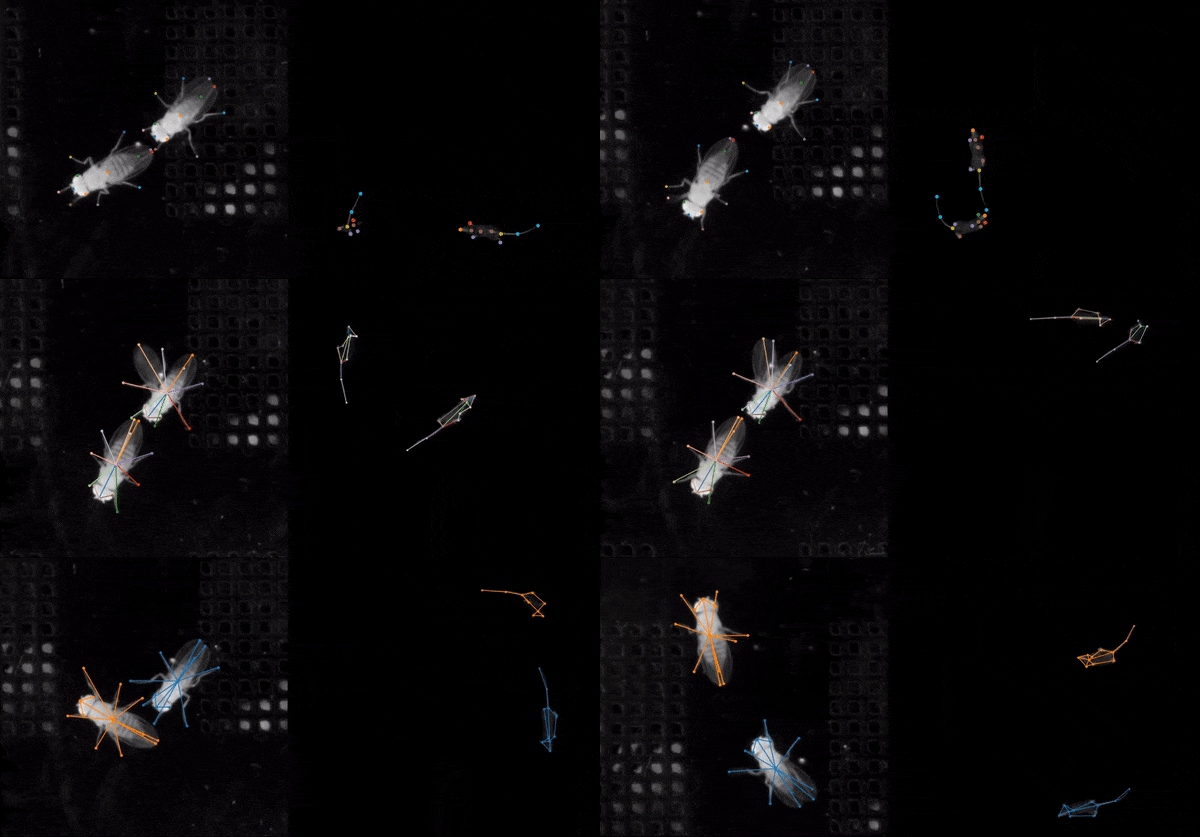
Another tool, (SLEAP AI), specializes in multi-animal pose tracking and has been applied to mice, flies (video demonstration), and other species, with open-source code available for customization. LabGym is designed for user-defined behaviors, quantifies actions without fixed categories and works with a range of animals from invertebrates to mammals. as described in its foundational report and peer-reviewed in Cell Reports Methods. In laboratory settings, deep learning tracks mice and other model species to study natural behaviors and responses in controlled environments. Systems that combine identification, tracking, pose estimation, and classification handle complex social interactions. These methods free researchers from hours of manual scoring while capturing subtle patterns that might otherwise be missed.
Machine Learning and Livestock Farms

On livestock farms, AI technologies monitor cattle and pigs for health and productivity signals. Computer vision systems recognize feeding, lying, aggression, and locomotion patterns that relate to welfare. Independent reviews confirm deep learning models effectively classify multiple livestock behaviors and even health despite challenges like operating in complex environments. Researchers at Scotland’s Rural College combine data streams into virtual farm models, sometimes called digital twins. The “twin” is a virtual version of the farm from cows and feed to buildings and equipment, using data from sensors, telemetry and digital tools. At the University of Wisconsin, the Dairy Brain initiative, data-integration hubs pull information from milking, feeding, and health systems for real-time insights into herd management.
Practical Benefits of Machine Learning
Overall, machine learning turns continuous data streams into structured records of activity budgets and space use. Challenges remain, including variable lighting, partial occlusion, and the need for diverse training data. Yet the technology already supplements human observation by covering periods when staff are unavailable and by providing consistent metrics over long time frames. Zoo projects, farm digital twins, and lab pose tools all demonstrate practical pathways that improve daily care decisions. Look for continued expansion of AI in precision livestock farming (PLF) and animal conservation work.
Otto and the Future of Animal Care
Otto continues to track advancements in technology and animal care to help facilities stay ahead of evolving needs. From custom animal caging and specialized enclosures to secure, durable security doors, we provide solutions designed around the unique requirements of your facility. When you’re ready to plan, upgrade, or expand your animal housing systems, contact Otto Caging to discuss a custom solution for your facility.